Three Burrell College student physicians turned a summer research project with New Mexico State University into two peer-reviewed publications examining COVID-19 vaccine refusal among high-risk populations in the United States.
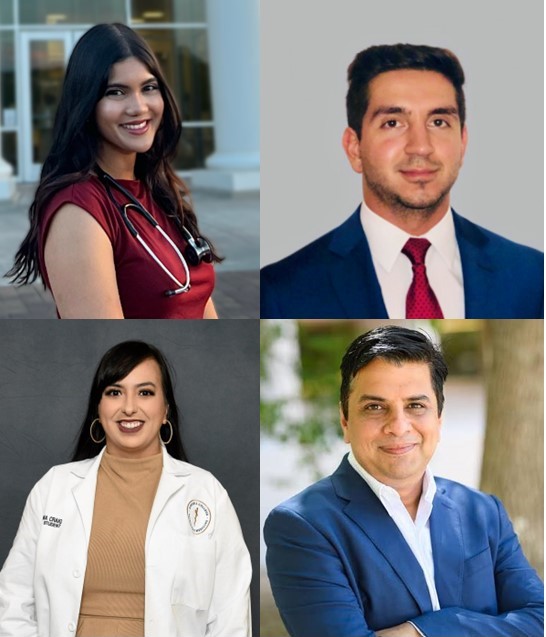
Working with Jagdish Khubchandani, Ph.D., professor of public health at NMSU, student physicians Nia Prabhu, Ahmad Adwan and Karishma Craig took part in a research project examining COVID-19 vaccine refusal and non-uptake among vulnerable populations. Their work resulted in two publications focused on people living with HIV and cancer survivors.
The project gave the students experience reviewing scientific literature, identifying research gaps and examining the factors that can shape healthcare decisions.
“Research has taught me to look beyond the numbers and better understand the factors that influence patients’ health decisions,” Adwan said.
The first publication, “COVID-19 Vaccine Refusal & Non-Uptake Among People Living with HIV,” appeared in July 2026 in the Journal of Community Health. The review examined 27 national studies involving 185,430 people living with HIV in the United States. Researchers found that an average of 21% of participants refused or did not receive the COVID-19 vaccine, with rates ranging from 3.8% to 57.9% across the studies.
The review identified several factors associated with vaccine refusal and non-uptake, including medical mistrust, concerns about vaccine safety and side effects, misinformation, lower income and education levels, and barriers such as housing instability and poverty. Prabhu and Craig were student co-authors of the review.
The second publication, “COVID-19 Vaccine Refusal Among Cancer Survivors in the United States,” appeared in August 2026 in the journal COVID. The review examined six studies involving 3,344 cancer survivors and found vaccine refusal rates ranging from 7.3% to 39%.
Researchers identified psychological and clinical factors that can affect vaccine confidence among cancer survivors. The findings also pointed to the need for communication strategies that address patient concerns in oncology and primary care settings. Adwan was a student co-author of the review.
For the students, the project offered more than research experience. It gave them a closer look at the reasons behind patients’ healthcare decisions and how those factors can affect patient care.
“This experience will directly benefit me as a future physician as it has helped me better understand why patients may be hesitant toward vaccination and appreciate that effective patient care involves more than simply providing medical recommendations,” Prabhu said.
Craig brought an existing interest in public health to the project. As an undergraduate at the University of California, Davis, she studied global disease biology and became interested in how disease affects communities and populations.
“This research gave me the opportunity to expand on those interests as a medical student and explore the intersection between public health, medical research, and clinical practice,” Craig said. “Seeing the project develop from reviewing the literature to a published manuscript has been an incredibly rewarding experience.”
The research also examined how trust, health literacy, access to information and personal experiences can influence healthcare decisions, reflecting the osteopathic principle of treating the whole person.
“Collaborative summer research programs provide future physicians with an irreplaceable foundation in evidence-based medicine and population health,” Khubchandani said. “Working alongside medical students from Burrell College allows us to bridge clinical insights with public health science, training the next generation of physicians to identify and address systemic health disparities in vulnerable patient populations.”
The two publications give the students an opportunity to contribute to research on vaccine hesitancy while bringing what they learned into their medical education and future practice.
The two publications are available here: